AI virtual assistant (Rio)
Product: RingCentral app (Enterprise B2B SaaS)
Platform: Desktop
Project context and goals
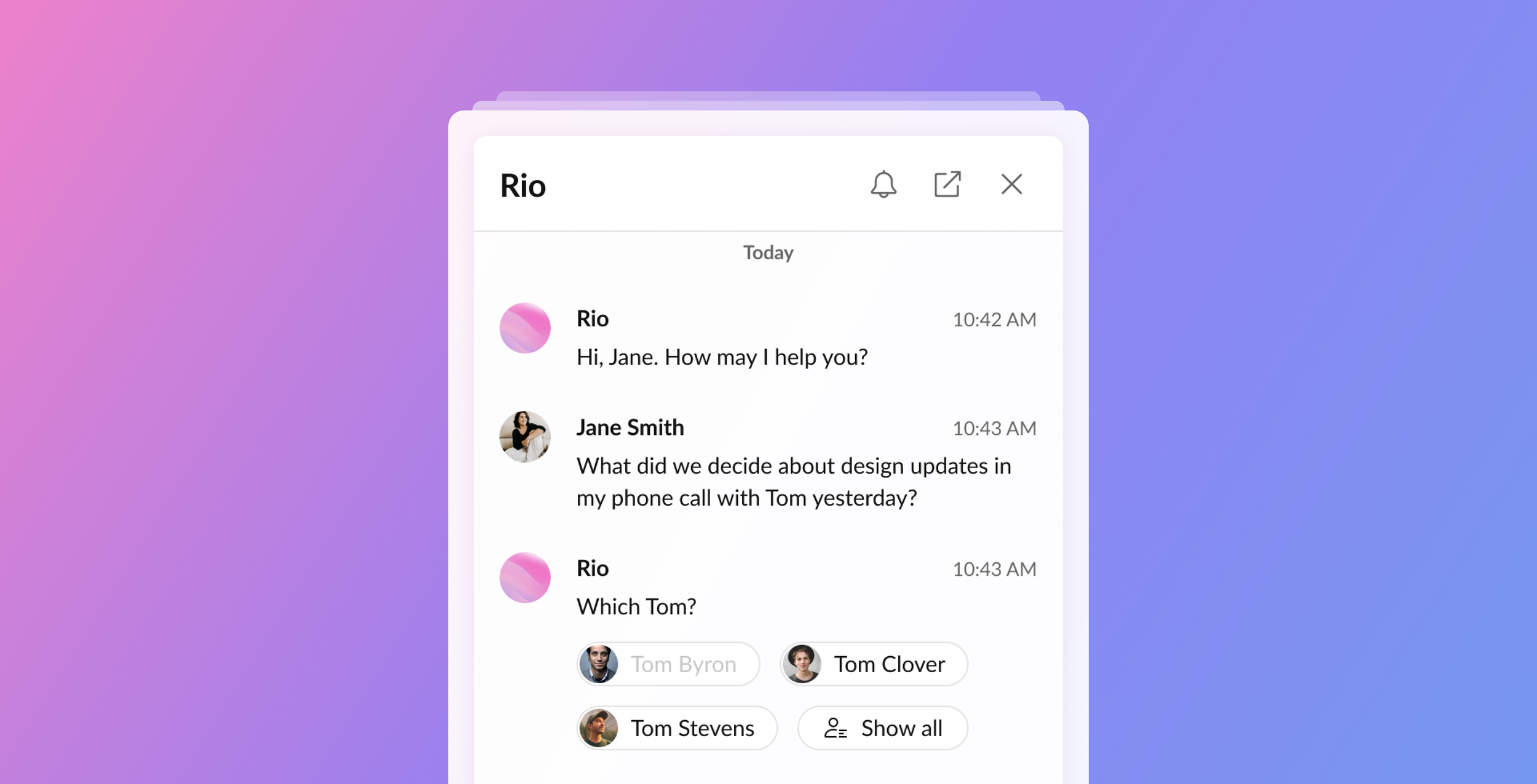
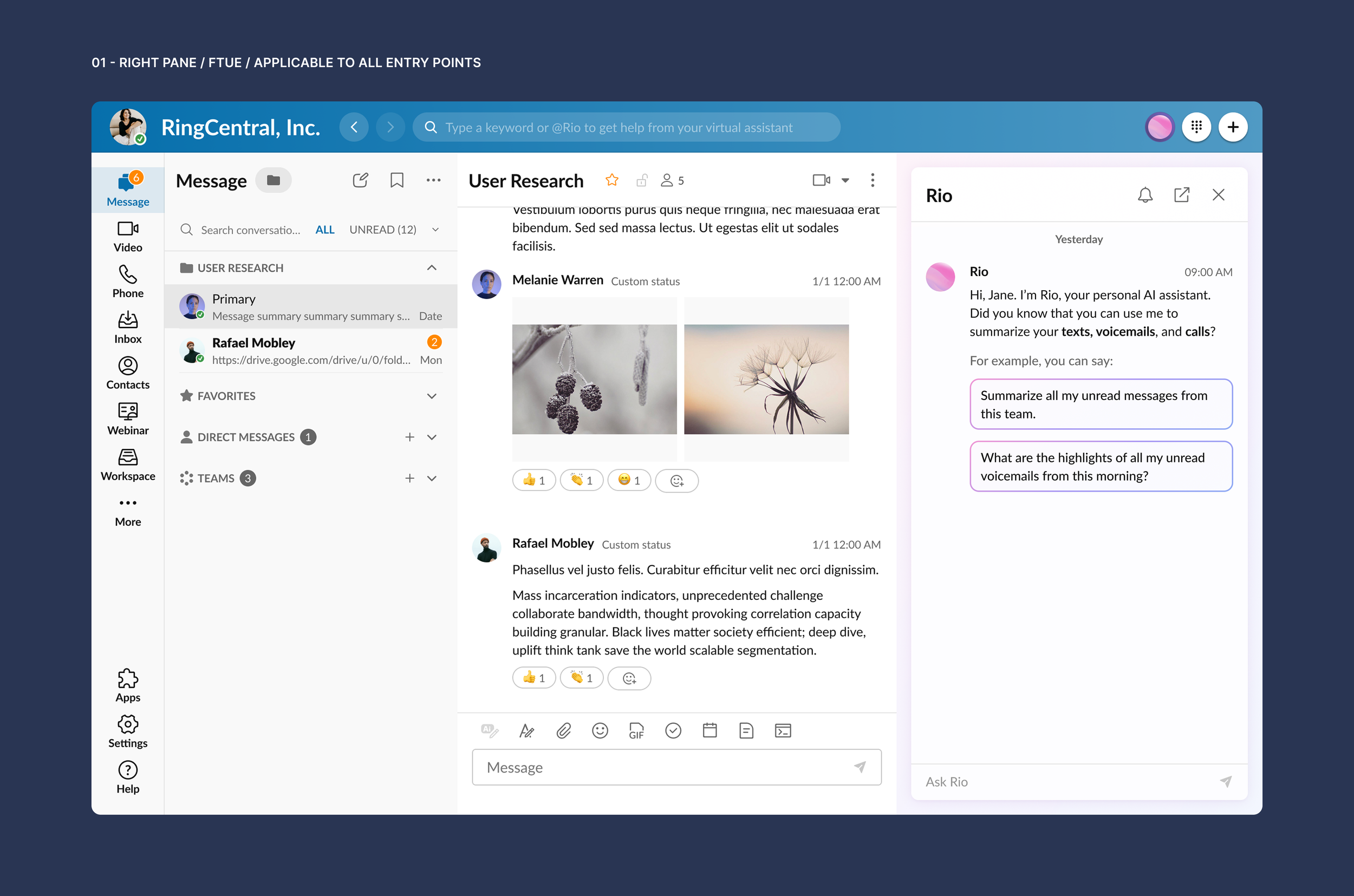
This project explores an early proof of concept (PoC) for an AI-powered virtual assistant embedded into the RingCentral desktop application.
At the initial stage, the team intentionally focused on a narrow and practical AI use case: helping users quickly generate summaries of calls, voicemails, and unread messages.
The goal of the project was to validate interaction patterns, entry points, and core AI-driven scenarios.
Design goals
Design an initial AI assistant experience that:
Focuses on summarization as a core capability
Feels naturally integrated into the existing desktop product
Supports multiple contextual entry points
Please note: the screens shown highlight the core experience, not the full end-to-end flow.
Problem
Users often deal with a high volume of meetings, calls, voicemails, and messages. Catching up after meetings or finding specific information across conversations can be time-consuming and cognitively demanding.
Stakeholders wanted to explore how an AI assistant could:
Reduce information overload
Help users quickly recall past interactions
Surface relevant content without manual searching
Key scenarios
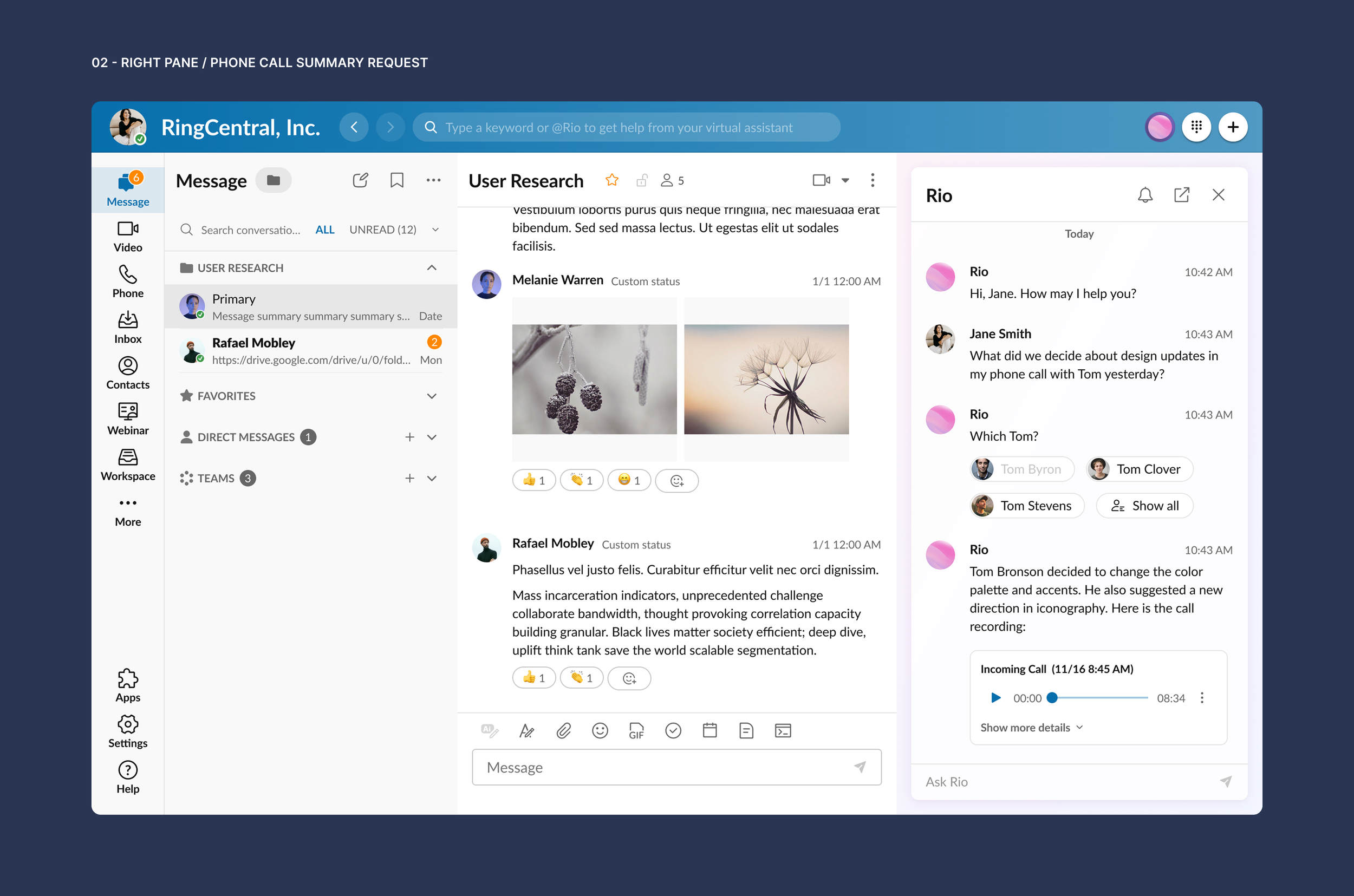
1. Conversation summary
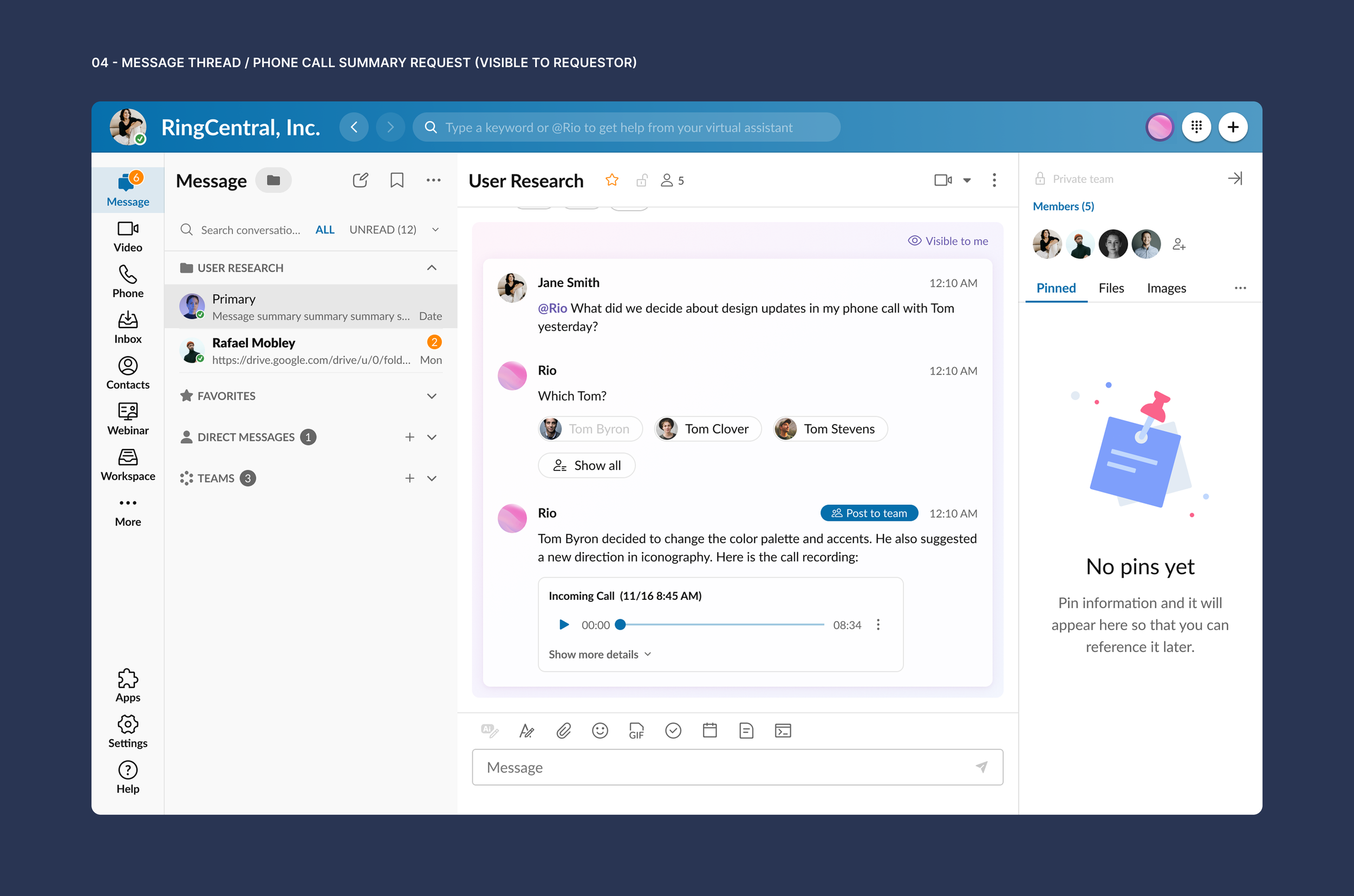
A user asks what they discussed with a specific person during a previous call.
If multiple contacts share the same name, the assistant asks for clarification
If a call recording is available, it is surfaced for playback
Otherwise, a text summary is provided
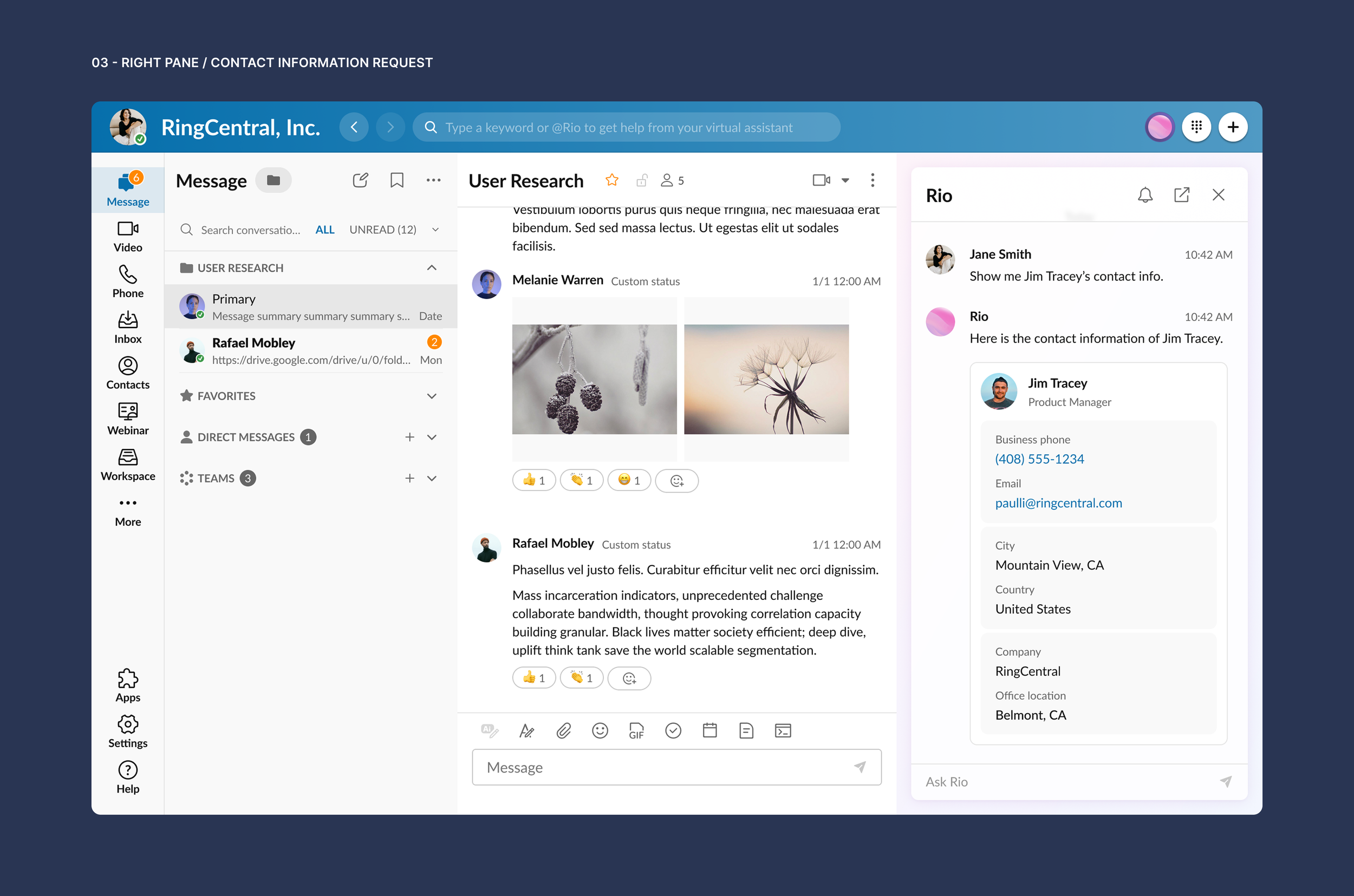
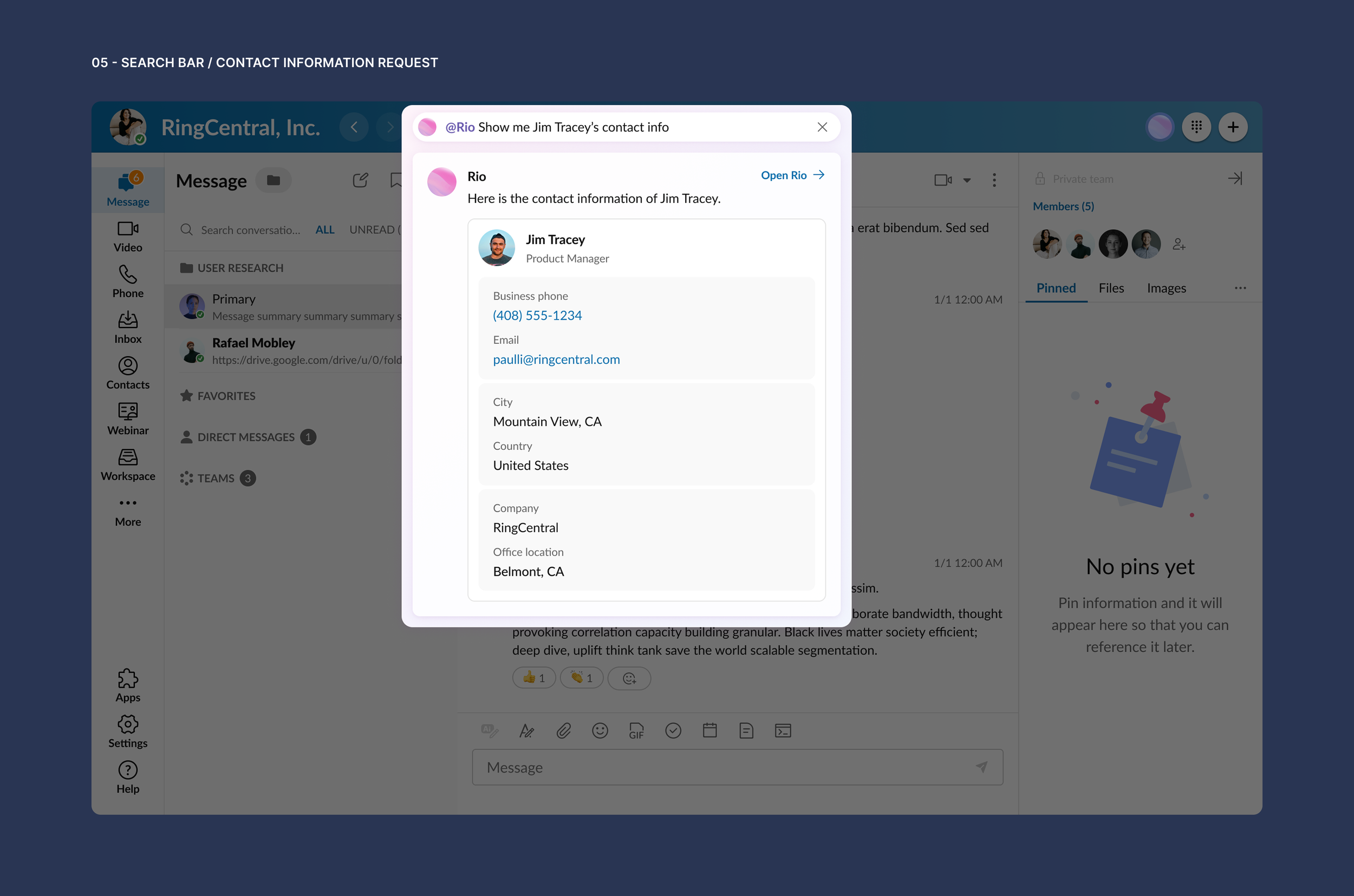
2. Contact information lookup
A user requests contact details for a colleague and receives them as a structured contact card.
Entry points
To explore discoverability and contextual access, the assistant was designed with multiple entry points:
Primary entry point:
A button in the top bar that opens the AI assistant in a right-side pane.Secondary entry points:
Search bar and message input field within the Messages tab.
My role
I was responsible for defining user flows across multiple entry points and shaping the interaction model for AI-driven summaries within the desktop application.
I designed pre-final visual concepts aligned with the design system, focusing on clarity and progressive disclosure, and built a prototype that demonstrated key interactions.
Outcome
The result was a cohesive PoC that:
Demonstrated how AI-powered summaries could fit into a complex enterprise product
Helped stakeholders align on realistic starting points for AI functionality
Served as a foundation for future discussions around expanding AI capabilities beyond summarization