Learning platform (RCU)
Enterprise B2B SaaS / Web
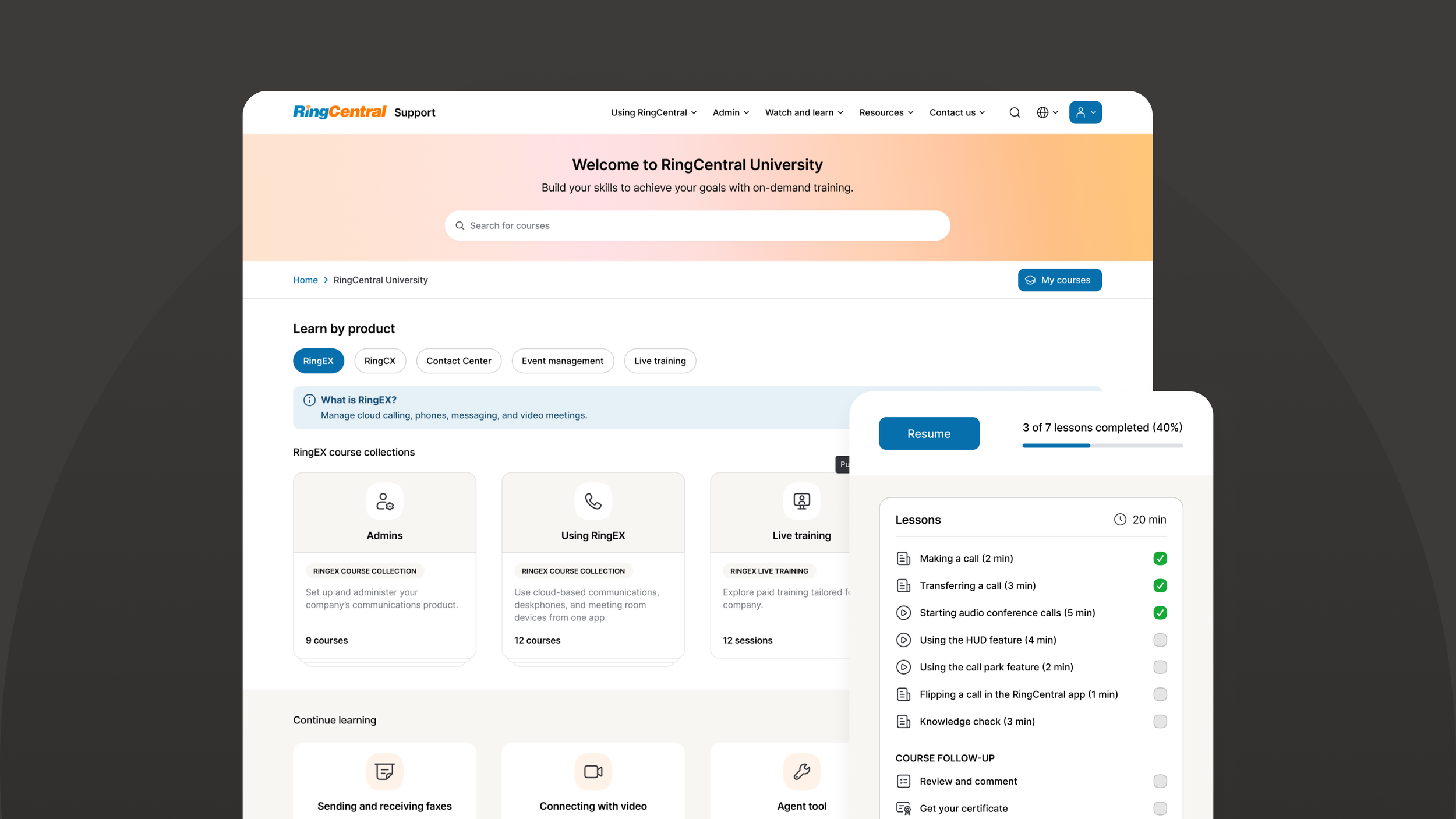
Project context and goals
RingCentral University (RCU) is an online learning platform designed to help users and administrators understand RingCentral products and features through courses and live webinars.
This project involved a complete redesign of the platform from the ground up, focusing on improving navigation, information architecture, and the overall learning experience.
Design goals
Design a modern learning experience that:
Provides clear and intuitive navigation across products
Improves course discoverability
Simplifies the course journey from start to completion
Aligns with the latest design system
Integrates into the support site
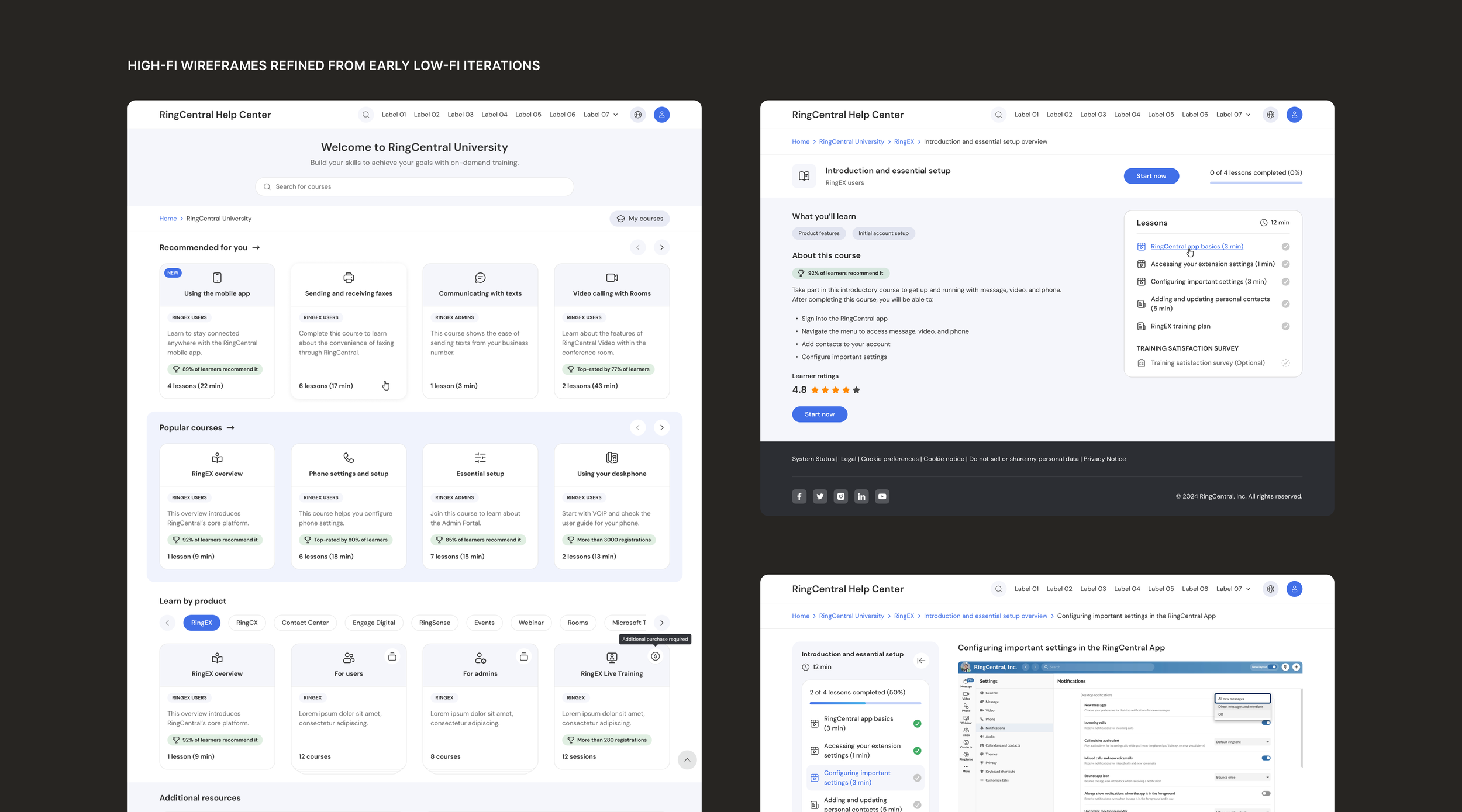
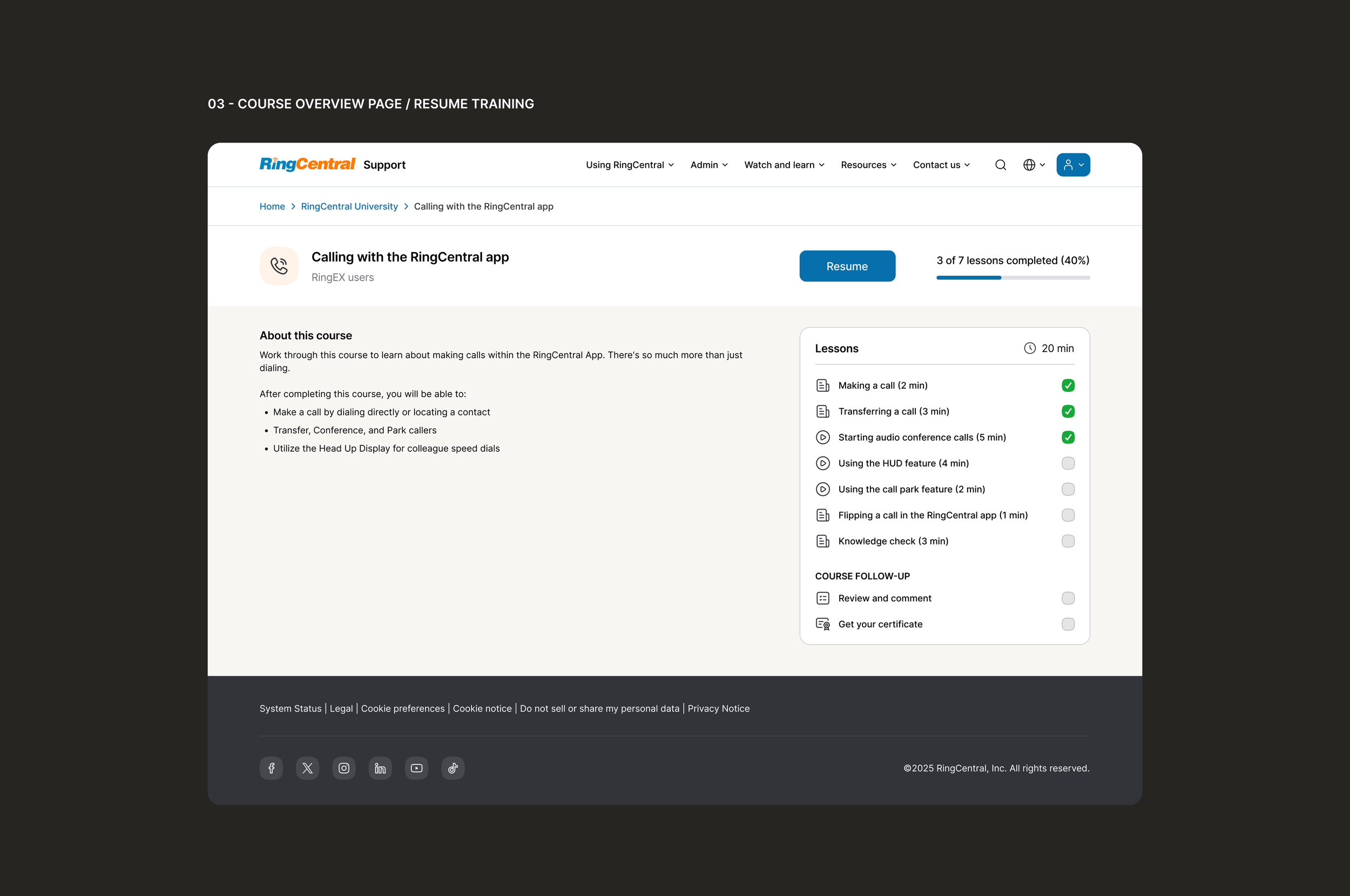
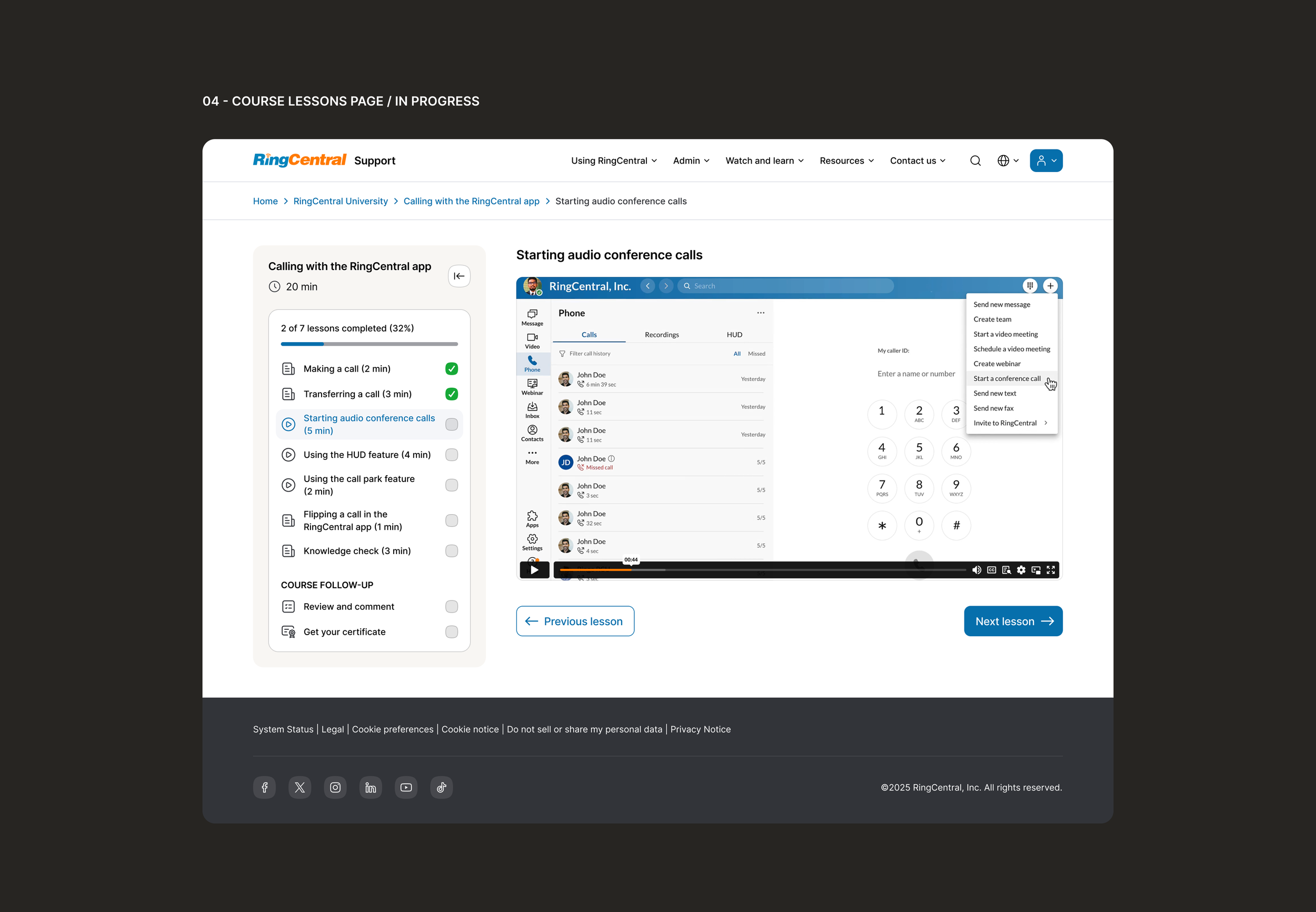
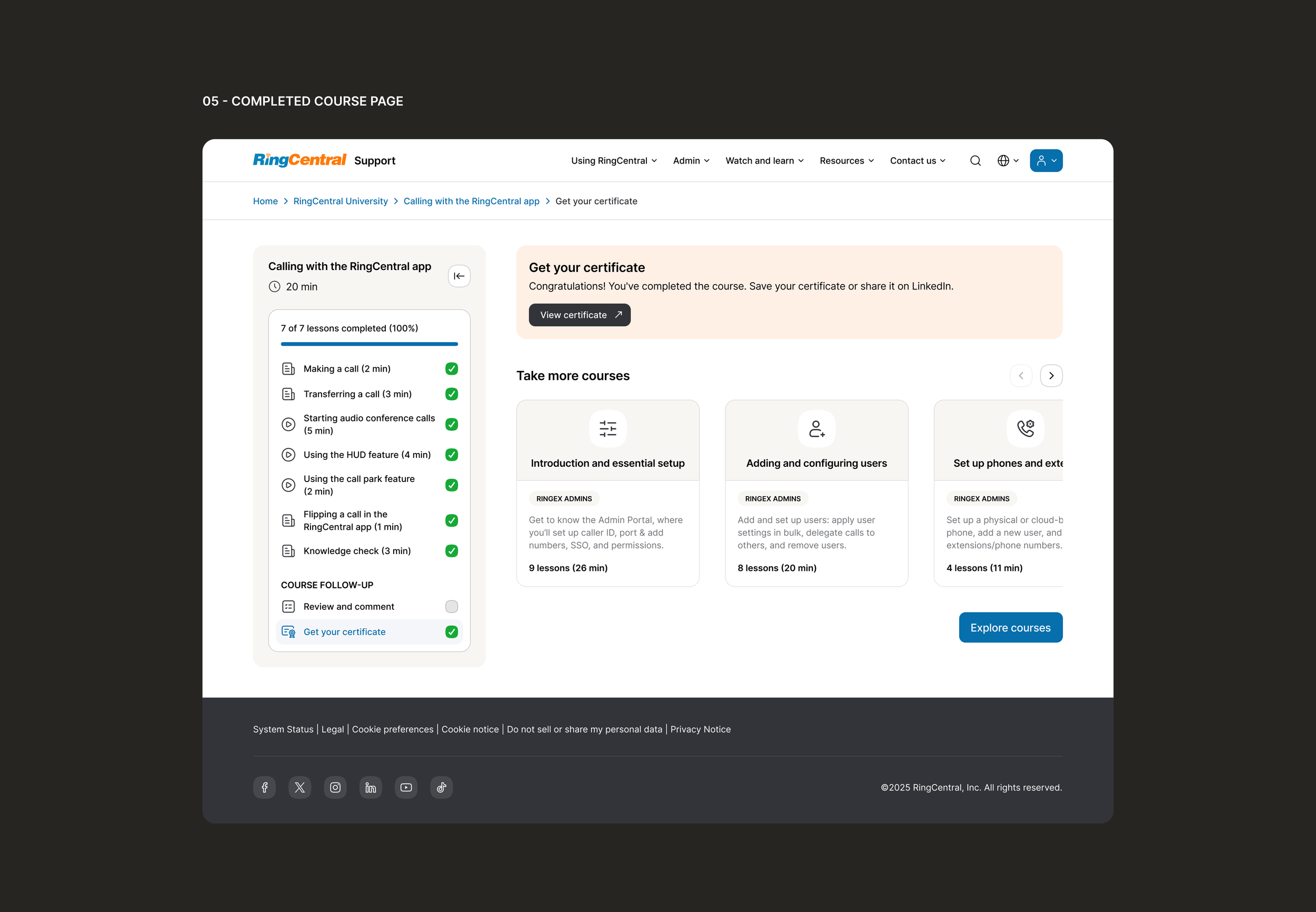
Please note: the screens shown highlight the core pages, not the full end-to-end flow.
Problem
The existing learning platform suffered from several UX issues:
Outdated and inconsistent visual design
Inefficient navigation and content discovery
Weak information hierarchy
These issues made it difficult for users to explore available courses and progress through learning paths efficiently.
My role
I was responsible for defining the new information architecture of the platform, designing the end-to-end user flows, and creating final visual designs aligned with the design system.
The process included competitor analysis, mid-fidelity wireframing for rapid ideation and iteration, and close collaboration with learning content managers, engineering, and UX leadership to ensure feasibility within platform constraints.
Platform constraints
RCU was built on Skilljar, which introduced several functional limitations.
While the core redesign vision was approved, several features were removed due to technical feasibility, including:
Recommended courses section
Social proof indicators
Course rating systems
This required balancing ideal UX solutions with platform realities.
Approach
Since this was my first experience designing a learning platform, I began with:
Learning about stakeholders’ requirements
Identifying core user jobs
Competitor analysis of existing learning ecosystems
Identification of common UX patterns and best practices
Ideation and wireframes
Key UX improvements
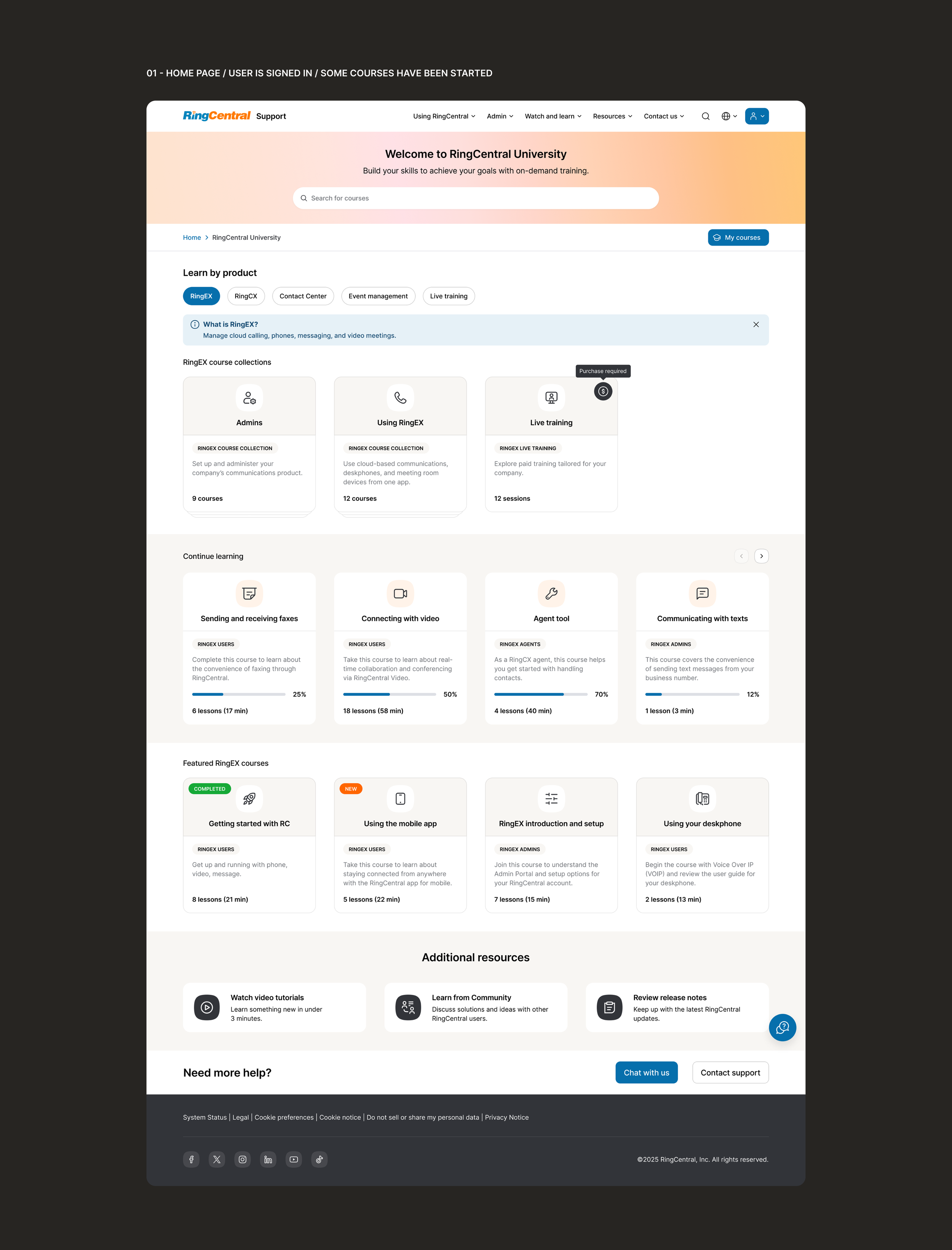
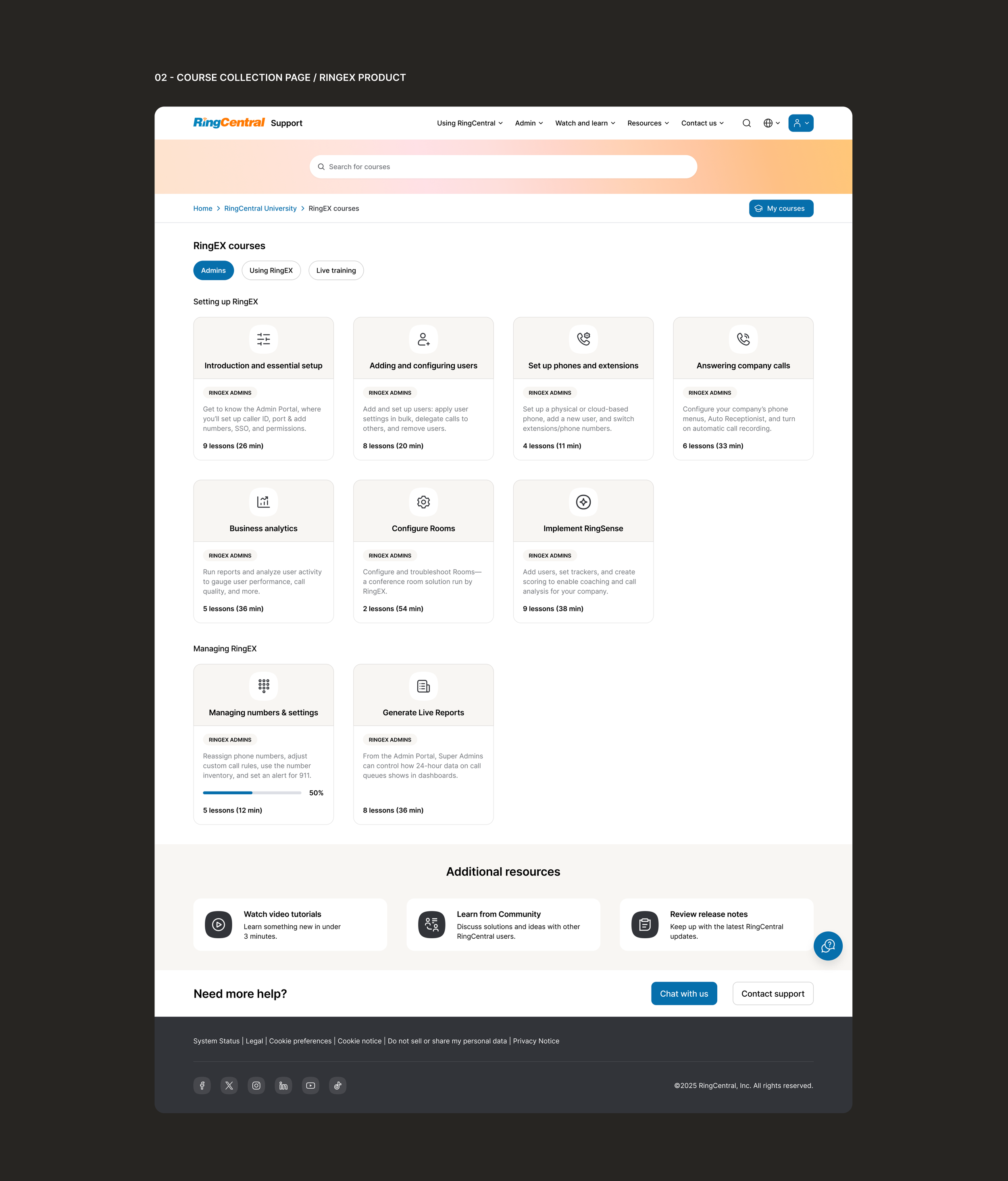
Improved information architecture
A clearer structure enabling easier navigation across products and content types.
Product-centered navigation
Courses organized by products and roles, supported by descriptive context.
Role-based discovery
Role tags were introduced to help users identify relevant courses faster.
Improved learning continuity
The Continue Learning section provides users with a quick way to resume in-progress courses.
Streamlined course experience
The learning journey became more straightforward and intuitive, guiding users smoothly from course discovery to completion.
Outcome
The redesigned platform delivered a more structured and intuitive learning experience through:
A better-structured and more accessible content hierarchy
Improved navigation and content discoverability
A more streamlined course progression flow